
The Law isn't the Gospel
Transcript
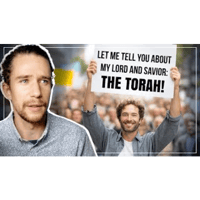
Jude asks the following regarding evangelism and outreach. Jude says, I notice many Torah observant Christians focus on evangelizing to other Christians, friends and family members, trying to get them to see that Torah is still for us today. I've also done this lately. I am reminded that Yeshua gave us the Great Commission to spread the Gospel, disciple and baptize, etc. How do we go about this as Torah observant Christians? What does that look like? How do we approach new believers without confusing them since the mainstream church teaches that certain things were done away with? All right, thank you, Jude. Good question. I really appreciate the fact that you are seeing this Great Commission to spread the Gospel. And it seems to me that you are noticing that there is a difference between the Great Commission or spreading the Gospel and teaching the Torah. Because there is. You know, one of the primary mistakes that I have seen people make who call themselves Torah observant, right, Is that they make a certain law in the Torah which they are passionate about, which is fine, but they make that passion law their gospel. So it's like, I need to go and tell everyone about a biblical feast day. I need to tell everyone about the Sabbath. I need to tell everyone about Zitzit. I need to tell everyone about this thing that I found, this knowledge that I discovered. But that's not what the gospel is. Because the Sabbath, a feast day, or how you eat, none of that is going to save you. Yeshua will. Yeshua is your only hope of salvation. And he's the only hope of salvation for the world, for your family, for your friends. That's the gospel that whosoever would believe in him would inherit eternal life. They would be saved. For he died for the sins of the world. He is the perfect Lamb of God. Hallelujah. That's the gospel. And so Yeshua sending out his disciples with the Great Commission, he says, go into the world and proclaim the gospel to all of creation. Right? Baptizing them, making disciples, teaching them all that I have commanded you. Now. Yes, teaching them all that I have commanded you is a part of the Great Commission. But notice that in order to get people into salvation, it's to proclaim the message that grants them salvation. The message that is the truth of how they are saved by faith in Christ. And so what we've sometimes fallen into, Christians in general have done this, by the way, is there's whatever your, what's on your radar right now, theologically, that's the thing you want to tell everyone, okay? But that should never become our Primary message of evangelism. For evangelism, the main reason we tell people about Jesus is so they may be saved. And that must be always the primary message we have when we make something else. Our gospel message, because the message of Jesus has died for us us, has become too boring for us, then we are in trouble and we are proclaiming another gospel. The gospel has always been the gospel, will always be the gospel and is the singular most important message because that's what's going to save people. Now then, once you've proclaimed Yeshua his sacrifice, they have accepted him, they want to follow him, Hallelujah. They come and they join in the fellowship. And now there's deeper discipleship that needs to happen. Of course, the first step is come in, get rid of the biggest sins, and then we are going to dive deeper. And over time, even over months and over years, you're going to discover and learn things as a believer and you're going to grow. And it takes about three years for someone to really get to a point where they're pretty well rounded if they've had good discipleship. So this is what happened in Acts 15, right? In Acts 15. This is the model. I'm not just taking this out of nowhere. This is the model that was given to us by the apostles where people came in, of course, the Pharisees, saying, if these men, they must be circumcised according to the law of Moses, and if they're not, they cannot be saved. Right? That's Acts 15, verse one. And then what do they do? They say, look, let us not trouble those of the Gentiles who are turning to God, but let's write to them to abstain from the things polluted by oral sexual morality which has been strangled and blood. For from ancient generations, Moses has had in every city those who proclaim him, for he has read every Sabbath in the synagogue. Right? This is the model that my judgment is we're not going to trouble people with the whole law of God. We're going to come to them in compassion. Because we all were where they were once. We were all sinners, pagans of this world, loaded down with issues. We're still addicted to pornography. We're still, which is, by the way, a low ranking issue that first needs to be sorted out. We're still dealing with our filthy mouth. We're still gossiping, we're still doing a whole bunch of stuff like these certain Gentiles had been doing, in their case, even drinking blood because of their paganism. And the solution is let's deal with those big issues first. Because we don't want to overwhelm these people. We give them the big things to overcome because these are basic that you need to do so that you can enter the fold. You can't stay in the fold and keep on doing sexual immorality. And then we're going to, as you come in and you attend fellowship, you're going to learn the rest. For from ancient generations, Moses has been proclaimed and will be proclaimed in the Sabbath in the synagogues. So that's the thing. So let's be careful of the mindset that so easily creeps into denominational thinking of, well, you don't do what we do. You don't keep Sabbath the way we do on the day we do in the ways we do. So you're not one of us. Or because you don't keep the feast we do the way we do on the calendar we do. You're not one of us. Or unless you eat the way we do, you're not one of us. So we have these things that we set up that are things that people would so easily learn if we had compassion on them and welcome them in with the gospel first. Instead, what we do is we make these things our gospel, go to people who need the gospel, but we don't give them the gospel because we're giving them the Sabbath. But they need Yeshua, they need to transform. They need a Holy Spirit baptism. They need a new life. And yes, the Sabbath is holy and righteous and good and God has given it, but they need Christ. And then when they find him, they start walking more like him. They learn more about him and all of the things of Christ come with. But they need him. They need that relationship and that change. That's. That's step one. So just last thing, quick story on this. I Years ago, I entered the workplace and I was my first job, right? And I remember I was sitting in a boardroom. There was a lady there, she had a toothache. I ended up praying for her. And she ends up getting healed in the middle of the boardroom meeting. And she is so rocked, amazed. And she's a Christian, but she would say she was not understanding something. She was still lukewarm in her life in that moment. But then she really caught the fire of God that she got so passionate. She couldn't believe that people could still get healed by Yeshua like that right there, even in my own boardroom at work. And she started realizing there's so much more even than, you know, what she may have been taught before. And so, you know, we had a journey of discipleship. You know, we had Bible study studies together. She joined and we baptized her. And very exciting time for her. She was just transformed. And you know, I remember, you know, I never pushed anything like this. And I don't believe in that. I never have. I believe that the compassion of God, the love of God, that I share that with someone, he transforms their hearts, he sets them free. And then in the discipleship process, things just come in, they just, it just comes like. Then she just one day asked me, pd, why are you so blessed at work? Why are you promoted? Why are you, why is it so well with you here? Kind of like, what's your secret, right? And I just told her, my, my secret is my Messiah and what he's given, right? The Sabbath in that case, Because I get to rest when everyone may still be working. I'm resting because that's a stand I took. And so she saw the blessing in my life that, that brought of the fourth commandment, obeying God in that way. And that's why she. And she did it out of her own free will, not because I forced her, but by nature. She would encounter the revelations by just being around the life that is in me and in other believers. That's what we are supposed to be. That life of God walking around that bread of God, walking around which people partake in, see the blessing of and want. But it starts always with the gospel. Go into the world, cause our demons, heal the sick, freely receive, freely give. And from there where they encounter the Lord, give them the Lord, give them the gospel and the rest comes. All right. Hope that answers your question, Jude. That's how evangelism should always be. And I really call on the, if I may say, Torah movement to get back on track with what the Gospel is and back and focused back on what evangelism is. Because it has been neglected and it is unacceptable. We cannot say we are followers of Christ yet not do the Great Commission. It is a part of walking as he walked and it is a non negotiable part of our lives. It's going to look different for us depending on where we are in our stages of life, but we should make it a priority. Sam.
Is the Torah the Gospel? In this teaching, we return to Acts 15 and the Great Commission to examine how the apostles proclaimed Messiah to new believers without confusing the message of salvation. We address a widespread mistake in our conversations: turning secondary practices into requirements for belonging.
How did the early church welcome Gentiles? What did they require—and what did they not require—for salvation and fellowship? This message seeks to restore clarity to evangelism, keep Christ at the center, and ensure that the Gospel remains good news, not a burden.
Support Rise on Fire Ministries by contributing to their tip jar: https://tips.pinecast.com/jar/rise-on-fire