
Is Jesus God? Am I teaching faith without works? Memory wipes in heaven? - Q&A's
Transcript
Shalom, everyone and welcome. I'm honored, excited for tonight. We are going to be doing our Q&As live. Welcome. It's been a while since we've done these and this is where we look at questions that you guys have sent in and we're going to just be answering them here live today. So some of the questions that we're going to be looking at today is the rule of works in our faith. There's the saying we are saved by grace through faith. But what about works? Does that mean that we can do whatever we want as long as we say we have faith? Another question that was sent in is regarding the identity of Jesus. Is Jesus God and should we worship him? Another one that people are asking is people say that it's not about religion but a relationship. What do they mean when they say that? And is that a true statement? We're going to look at that statement and then another question that's asked is, let's see if I can get to the next page. Here we go. Is will we remember our former life in heaven? Another one is, what is the purpose of prayer if God's will is unmovable anyway? May we pray in our minds? Are vocalized prayers more powerful? And then lastly, are online fellowships considered holy convocations according to scripture? All right, guys, I'm going to just jump right in with the first questions. We have a lot to go through tonight. Thank you all for sending in your questions. And you know, we're going to try and get to all of them, but we'll see what time allows. I also want to say I do not know everything, but we're going to rely and journey with the Holy Spirit here tonight and see how he can lead us in reading of Scripture. First one that I'm going to go into right now is sent in by Lisa and she says the following hi pd, you recently spoke that our salvation comes by faith, through grace, and not by works. And I wholeheartedly believe that there are also scriptures that say if we don't do the will of God, and sometimes this involves works. See Matthew 25 that talks about giving and caring for people or the parable of the talents, for example. And if we don't care about these things, then we will be thrown into outer darkness where there will be weeping and gnashing of teeth. We should always be obedient to our Heavenly Father. But this is just a few examples of works that seem to relate to our salvation. Unfortunately, mainstream Christianity teaches once saved, always saved. But I believe it's possible to lose our salvation and feel that more shepherds should warn of this. All right, well, thank you so much, Lisa, for sending that in from Washington. I appreciate that. And this is really a. A great topic to open the night with. You know, we put out a video, two videos last week talking about the gospel. We talked about false gospels. If you haven't watched that, just look at our channel. The video is called Exposing the False Gospel. And in it, we focused on a certain false gospel, and that is salvation by works. Now, when we are thinking about salvation, there are two pitfalls that people fall into. And the one is the one that I just mentioned, the idea that we are saved by our works, that results in a type of legalism. It often also results in boastful thinking. This is why we see that the scriptures warn. Paul talks about it. There will be no reason to boast, right? That's the. If we are saved by faith, but if we are saved by works, then there would be a reason to boast because, well, you know, look at my works. I am able to work myself into the presence of God on my own accord. That means I am a God because that's what it would take by my works. I need to be perfect as God is perfect, right? To make it into his presence on my own accord. But humility results in me saying, I'm not a God. I'm not able. I need mercy, I need grace, and I need to grab a hold of the tzitzit, the garment, the fringe of the garment of the Messiah, for him to save me as my only hope, right? That's that. So saved by works is a problem. And then there's another side of the aisle that's a problem, another pitfall. And that is the idea of being saved without works. Now, this idea that Lisa mentioned, right? Once saved, always saved. We see this in the world, and it has resulted at times with the thinking of, well, look, I can say, jesus, I love you, Jesus, come into my heart, Jesus, I put faith in you. I can put a nice Facebook status on my social media, right? I can say a lot of things. But if I have no transformation, if I have no change, that's starting to occur as time goes on, no sanctification like I am the exact person I was before I said yes to Jesus now. And nothing is shifting, nothing is changing. And I am proud of that. I would say, well, Jesus just forgives me. I can do what I want. Don't come with rules, don't come with this holiness thing. It's me and Jesus, let us just. Like, we have a good thing going here, right? Like we. We create this Jesus in our mind, that we want him to be this Jesus that doesn't care about how we live, but he does care about how we live. He cares about our lifestyle. He cares about our works. And that's why Lisa was right. She mentioned Matthew 25 and a few other places. We'll get to that in a moment. But where he is speaking to his people and he's saying, I expect of you to live a certain way. I expect of you to be different from the world, unstained. And I expect of you to love radically, especially the least, especially those who've not been loved. There are these expectations, but it's also now the understanding that we must have that. These callings of holiness and love and so on, that us entering that, us doing those things, that in of itself is not what cleanses and saves us and makes us holy and righteous. They are not able to because we are not good enough of our own works and our own abilities. Like, I can feed so many people who are poor. I can love so many people who need my love. I can, you know, keep as many Sabbath days right as I can. But I will still fall short when it comes to salvation because I recognize through the humility that the Lord gives us, we can recognize I still have spots and blemishes. I have areas in my life that need work. I am a work in progress. The Lord is working on me. He is sanctifying me. Yes, I am better than yesterday. I am better than before I met him, but I am not good enough of my own accord. Now what happens is what we see. We look in the world and we see people who, for example, they're on one side or the other. They're on, for example, on one of the sides. We just discussed the side of, well, the guy who says, I'm saved and I can do whatever I want, right? And we look at that and we feel a strong emotion of perhaps disgust. We look at that and we know something is wrong with that picture. We look at that and we say, how can you say you love Jesus but not even want to live like Him? You know, we're all a work in progress. We get that. We're all trying. But how can you say, I love Jesus, but I'm not even. But you're not even trying, and you're actually walking in rebellion. And then you say you have faith, right? It frustrates us, and it should. And it's godly to Be frustrated by that. I want to read to you Psalm 119,158. It says this. I look at the faithless with disgust because they do not keep your commands. There it is, right there. To look at the faithless with disgust. Now notice he uses the word the faithless. See, people can say, I have faith. People can say, I believe in Jesus, I follow the Messiah. But he says, here I look at the faithless with disgust because they do not keep your commandments. Because they can say, I have faith. I have faith. But if their life does not reflect what they are saying, if they do not start bearing good fruit, then they do not have faith. They are faithless. See, true faith means that the Holy Spirit is working in us and we become the workmanship of God. We are not able to change our own works by own accord. Like we, the world cannot save themselves, right? Like doing a. We can recognize that hopefully, like. Like the world are trying. Like they're trying to save themselves. They're trying all kinds of tools and mechanisms and ways. They think money will do it. They think there's a whole bunch of stuff they're trying, but it's not going to work. They recognize I need. Well, they should recognize we have, as we have recognized that we need a Messiah. And then from that faith in him, he saves us, he sanctifies us. He gives us the power to change. But if we look at those who are saying one thing, saying, I believe in Jesus, but they're not actually walking like it, and we feel this disgust we just read about, it's easy to react. It's easy to jump on the other side and say, well, see, the problem is that they're not keeping the commandments. I mean, we just read it, right? I look at the faithless with disgust because they do not keep the commandments. So keeping the commandments is now the thing that becomes the focus of our salvation. Because we are reacting to what we see that can happen. And that has happened. And some people, right? And so now suddenly the same problem that occurred in the first century with many of the religious of that day can start happening in our midst, where we start saying, well, their solution is if people just keep the commandments as it pertains to their salvation. And then we come to them and say, so look, you can be saved, but don't tell me you're saved unless you're keeping this commandment. And that's what happened. And let's read it. Acts 15:1. Some men came down from Judea and were teaching the Brothers, unless you are circumcised, unless you are circumcised according to the custom of Moses, you cannot be saved. And so here we now see that a wall is built. You cannot be saved unless you obey this law that I feel you should obey, that I feel passionate about. This is the standard that I place in front of you. And then you can be, as it's written, saved. But what is the response of the apostles in this situation? Now, of course, many of you know the story, but I want to highlight something that many people don't realize. In verse 8, we see the following. This is what they say. And God, who knows the heart, right, he's now talking about these people who are, who are ex pagans. They just came to the realization of the Messiah. They just started placing their faith in Jesus, right, in Yeshua. And now they're like, okay, and there's these other brothers who are religious and they're saying, well, I have to be circumcised, otherwise I can't belong to Jesus, right? And so now the apostles come in and they say to these ex pagans who are baby Christians for all practical purposes, and they say, God, who knows the heart, bore witness to them by giving them the Holy Spirit, just as he did to us. This is a big deal. He's saying, look, guys, they have been given the Holy Spirit. These people who are not circumcised, these people who are not keeping all the instructions that you think they should be keeping. Look what he says next. And God made no distinction between us and them, having cleansed their hearts by faith. By what? By faith. And God made no distinction. You are not better than they are just because you are circumcised. They have been cleansed just as you have been cleansed. They have received the Holy Spirit just as you've received the Holy Spirit. And this is really radical if you think about it, because of what happens next. Because next we actually are shown a picture of what the state of these ex pagan, now baby Christians actually are. The state of these people whom the apostles are saying they have been saved and cleansed and received the Holy Spirit is that they are still in eating food sacrificed to idols, they're still struggling with sexual immorality. They're still eating food that have been strangled and they are. And that has blood in it, right? Like these are real problems that many of us would look at and say, like, you know, God, I don't think this person saved, right? They've been eating. They. They should abstain from These things, political ardor, sexual morality, that which has been strangled and from blood. Acts 15, verse 20. And we could look at a person like this who's still busy with these things and say, there's no way that they are saved. But here the apostles are saying they have received the Holy Spirit and they have been cleansed in their hearts. Now that does not mean that there isn't work that needs to be done. There's a lot of work that needs to be done on anyone who just gave their life to God. On anyone. Me, when I gave my life to God. You, when you gave your life to God. There's a lot of things on the outward that still looks like, you know, rough. And that's the thief on the cross too. Think about him. He's there for what he's, he's bleeding, he's dying, he's being executed because he's a thief. That means he was probably a pretty big thief. Where even the pagans thought that he's a bad guy and put him on that cross and he professes, what faith in the Messiah. And he says, think of me when you enter the kingdom. And Yeshua turns to him and says, I tell you the truth, today you will be with me. See, when we look at that moment, the thief didn't have a chance to prove his salvation by works. Think about this for a second. He didn't. He didn't have a chance. But if he did, if he could get off of that cross and live a normal rest of his life, die an old man, then we would see fruit. We would see him no longer be a thief, repent of all of his wicked ways. Because the Messiah saw that in his heart in that moment on that cross, the thief didn't have a chance to have the evidence come of his faith. But Yeshua, because he is who he is, Jesus is who he is. He can see the heart of a man in a way that I and you cannot, right? And he said, I see that your faith is real and because of that you will be saved. So that's the thing, is that if someone can be saved and in their early life of salvation, they are still working things out and God is working on them, with them, and they are becoming the workmanship of God over time. And so you should be slow to judge. But if someone is rebellious against God, yet they profess him, right? If someone is hard hearted against changing their ways, yet they profess him, Right now we're talking about something else. We're not talking about the thief on the cross who had real faith anymore. We're talking about what we read about earlier in the Psalms, the faithless. The one who says he has faith but actually despises the word of God, the commandments of God and holiness. And so I will remind everyone as I, you know, wrap this part up here in Ephesians 2, we read this. For by grace you've been saved through faith. And this is not your own doing, full stop. Okay? That's it. It's not your own doing. It is the gift of God to the thief. It was his gift. It was not what he had done. He could not do anything except profess. That's all he could do. Not a result of works so that no man may boast. For we are his workmanship, created in Christ Jesus for good works, which God prepared beforehand that we should walk in them. Okay, that's what we just talked about now. And so when people looked at our teachings last week, where we really focused on this aspect of how we are saved by grace through faith, some were saying or thinking, some, a few, not many people, thankfully, but a few were commenting and questioning, you know, are we leading people away from the commandments? You know, things like this, which is of course not true. We have so many teachings leading people towards the words of our Messiah and what he calls us to do and how he calls us to live. But I want to remind you that in your life, you are going to. When you stand up for the true gospel, you're going to have people come against you in this way because they came against the very one who wrote what we just read. We just read Ephesians, right? For by grace you've been saved through faith. And that was written by who? Paul the apostle. And Paul, if you remember, Acts 21, 21, we get a glimpse of what's happening in the first century about what people think of him, because we see that the rest of the disciples come to him and they say, look, people have been told about you, that you teach all the Jews who are among the Gentiles to forsake Moses, telling him not to circumcise their children or walk according to our customs. What is to be done then? Okay? And then they go on. And he says to Paul, take an azerite vow and then prove by your obedience that you yourself also live in observance of the law of God so that we can put all these rumors to rest that you are leading people away from obeying the law of God. And so just, you know, if Paul was accused falsely of leading People away from the law of God because he professed what the gospel is and that it is not a result of your works, then we can expect the same. We can expect people to come and say, well, you're just now leading people away from the law. No, not at all. In fact, I'm leading people to Yeshua because I know that he is able and he's the only one who's able, by the way, to actually change their hearts, transform them so that they would want to obey God's law. So I agree with you, Lisa, fully. You know, there are, there's this, there's definitely two sides of this problem. And I agree that we should look after the poor, that we should obey the commandments. And if we did live a life where we professed Messiah, but yet. And we knew what to do, we knew we should be looking after the poor, but we don't do it. As in Matthew 25:35, he warns that there will be those who, who will hear that as the Messiah said, when you were with me, you did not feed me, did not clothe me. And they will say, well, when do we see you? When did we even have the chance? And he said, what you did to the least of these, you did unto me. And then he will cast certain into outer darkness because of that. When we come to him with true faith, true faith means we are convicted, we want to change, we, we want to be generous, we want to love people. But we know that those things are not what saves us. They are simply the outward fruit of having true faith in Him. Just like those ex pagans who are baby Christians in Acts 15 we just read about. They too were on that journey. And so it's a journey where our Lord has grace on us, he has mercy on us. He's teaching me every day. He's teaching you every day. He's convicting us by God, new things daily. So this is a process. This is not a this. As long as I have my eyes on him and saying, lord, I need you to help me, change me, deliver me, make me more like you. And lord, show me so I can do it. Like that's true faith, right? If that's what you mean, with your heart, that's true faith. And then yeah, I'm going to try and I'm going to stumble at times. I'm going to like get up again and I'm going to, you know, there's this, this running after the Lord and he has grace as long as I keep my eyes on Him. And I'm not walking into rebellion. Okay. So if there's someone listening right now who wants to understand more about how we are saved by grace through faith, check my teaching out that I did on this on our channel called We've lost the meaning of Baptism, the mystery of water, fire, and the Gospel. And if you are listening to this right now and you want to learn more about the other side of obeying God, look at a teaching I recently did called the untold truth of Judgment Day, Jesus's day of Atonement parable. You can also look at our teaching called the line by line study of the Ten Commandments, as well as our teaching called the forgotten Bible laws that actually still matter. In these teachings, we reinforce the importance of holiness, love obeying God. Okay? So I hope that kind of puts things to rest for anyone who's wondering about the direction that our ministry is taking. Our direction has not changed. It has always been this and it will always be that we are saved absolutely by Yeshua and that we have been saved unto the workmanship of God, where we start walking in holiness. Okay, next question. Let's get into it. I hope, Lisa, that that helped you. I hope I fully answered that. There was a lot that we spoke about, but thank you so much for sending that one in. Next question is, is Jesus to be worshiped? And this is from someone who wishes to remain anonymous, from Texas. I have heard some opinions around me lately saying that though he is our Messiah, that Jesus is not God, that he is separate. They also say that because of this, that we shouldn't worship him, since we should only worship the one true God. Please, please shed some light and scripture in this regard. Thank you and blessings. Okay, well, you are asking for me to shed some light on scripture. I have good news. I'm gonna just read scripture. I'm gonna let scripture speak for itself. I think Scripture is so sufficiently able to answer this by just reading it. And that's what we're going to do, right? So, guys, let's jump in. I'm going to go. We don't have much time, right? We have a lot of questions to go through, so I'm going to go through this. Pause it, rewind it if you need to, but let's run through this, right? Hebrews 1, verse 2. We read this. But in these last days, he has spoken to us by His Son, whom He appointed the heir of all things, through whom also he created the world. Okay, hold up. Through whom he also. Also he created the world. He is the radiance of the Glory of God and the exact imprint of his nature. And he upholds the universe by the word of his power. After making purification for sins, he sat down at the right hand of the majesty on high. Okay, so we're reading a few things about the Son, about Yeshua right now. Through whom he created the world is one of the things. Wait, who is the one who created the world? The Creator? And what is the nature of the Messiah? Well, it says that the exact imprint of God's nature. Okay, let's read on. Colossians 1:15. I mean, we need to go through. We need to, like. We need confirmation on, like, you know, what's. Who is. He says he is the image of the invisible God, the firstborn of all creation. For by him all things were created. Well, here we get it again. So Jesus created all things in heaven and on earth, it says visible, invisible, whether thrones, dominions, rulers, authorities, all. All things were created through him and for Him. And he is before all things, and in him all things hold together. And he is the head of the body, the church. He is the beginning, the firstborn from the dead. That in everything, he might be preeminent. For in him all the fullness of God was pleased to dwell, and through him to reconcile to Himself all things, whether on earth or in heaven, making peace by the blood of his cross. Okay, I don't know about you guys, but I have not known any person on this earth who can say in him all the fullness of God was pleased to dwell. I have never met anyone who I can say of that. By Him. By him, all things were created. This is not just speaking about any person. I have never met a person on this earth whom I can say of that he is before all things. I can only say these things of Yeshua, the Messiah. That's whom this is speaking of. And this is whom this is true of. So Yeshua created all things. He was before all things. And the fullness of God dwells in Yeshua. That's what we just read. Let's read some more, because maybe you're not yet satisfied. Okay, John 1:1. In the beginning was the Word, and the Word was with God. And the Word was God. Of course we're talking about Yeshua, the Messiah, Jesus. So the Word was with God. The Word was God, you say? Petey, this doesn't make sense to me. It's okay. He's God. You're not. He was in the beginning with God. All things were made through Him. Here we get the same thing over and over. And over that he is the Creator. And without him was not anything that was made. Okay, let's read Revelation 1:17. When I saw him, I fell at his feet as though dead. But he laid his right hand on me, saying, fear not, I am the first and the last. Hmm. Then he says, and the living one, I died. And behold, I am alive forevermore. And I have the keys of death and Hades. Okay, we know who this is. The one who died and resurrected. And now he says the statement that I am the first and the last. Now if you know what he is saying, this is a radical statement. I mean, guys, he is quoting Isaiah 44. 6, where it says this same statement, thus is the Lord, right? Yod hey vav heh. The King of Israel and his Redeemer, the Lord of house. I am the first and the last. Besides me, there is no God, he says, who is like me. Let him proclaim it. Let him declare it and set it before me. Since I appointed an ancient people, let them declare what is to come and what will happen. Fear not, nor be afraid. Have I not told you from of old and declared it? And you are my witnesses. Is there a God besides me? There is no rock. I know not any. So Yeshua, the Messiah in Revelation says, I am the first and the last. We come to where he is quoting this from. It's Isaiah 44, where God says, I am the first and the last. Besides me, there is no God. He is saying, there is no other. This is the whole. No one, no one, just me, just me. I am the only one true God. And Jesus says, I am the first and the last. God says, I am the first and the last. Jesus says of him, it is spoken that he is the Creator, over and over and over again, because this is who he is. And so now we come to the question, should we worship him? Let's go into that. Matthew 14:33. And this is where the disciples saw him, calming the storm, something that only God could do. And they do what it says in verse 33. And those in the boat worshiped him, saying, truly you are the Son of God. And notice that Jesus does not reject their worship. John 9:38, blind man is healed. And he says, lord, I believe. And he worshiped him after Yeshua is resurrected. And Matthew 28:9, it says, Behold, Jesus met with them and said, greetings. And they came up and took hold of his feet and worshiped him. And again, never, never ever does Yeshua reject their worship. Let's look at Luke 24:51. This is not the Ascension. While he blessed them, he parted from them and was carried up into heaven. And they worshiped him and returned to Jerusalem with great joy. Not once are they encouraged to not. And even when he ascends now right leaves into heaven, they still continue this trend of worshiping Him. See, when an angel comes and they fell down in worship to the angel because they saw the angel as divine. The angel said, no, no, no, don't worship me. I am just a messenger. But see, when the Messiah is being worshipped, when Yeshua is being worshipped, he does not tell them, do not worship me. I am but a messenger. I am but an agent. I am just the Messiah. You know, I'm not God. Don't worship me. No, he is God. He's the Creator. He's worthy of worship and he should be worshipped. Everyone will bow the knee to him. Everyone. Whether you want to today or not. One day you will bow the knee and you will worship Him. Brothers and sisters, I feel it is so important. I'm speaking very directly in this because it is so important that we understand who our Messiah is. Because if we do not know who he is, then nothing really else matters. If we cannot understand his identity and him being worthy of our worship, we are missing something huge. And our relationship with him will be affected. Our relationship with mankind will be affected. It is important for us to know this. So I pray that I. This is my desire that I would worship him all the days of my life into eternity and for eternity. And I pray for you to have the same. And you would worship him all the days of your life into eternity. For I wish to see you alongside me in the kingdom to come worshiping Him. Okay, if you want. We don't have, you know, there's much more to say on this, on, is Jesus God? So if you want to learn more about this, you want to dig deeper, go deeper. Check out my teaching. It's called, is Jesus God? The glory of Christ revealed in the Scriptures? Is Jesus God? The glory of Christ revealed in the Scriptures? Okay, thank you so much for sending that one in. I appreciate that we actually received, like many people asking, can I worship Jesus? Should I worship Jesus? Is He God? Who is he? Many this time? So we had to answer that. Okay, next one is regarding. Let's go. Not a religion, but a relationship. This is a statement that many of you, I'm sure all of you have heard. And someone from Chicago who wishes to remain anonymous asked this. Lately I've been hearing many Christians saying that Christianity is not a religion. But it's about having a relationship with him. I do not understand the context. I was wondering if you could give me some insight on this matter. Okay. Well, thank you for sending this in. It's a good question. And I'll say this, that it's going to depend on what the person means by the terms that they use. Because I think that I can at least think of two ways that this can be used. Two different meanings can be attached to it. And so I'm going to quickly go through that and give you some of my thoughts on this. One area where I think this has come from is because of a fear of rules without fruit. And what I mean by that is that there are people who have seen believers who latch onto an appearance of religion. In other words, there are certain biblical rules, biblical commandments that they want to keep and they keep. And it's the kind of commandments that have a lot to do with their outward appearance. This is what the Pharisees in the first century did. They. They had cleaned themselves on the outside, but inwardly they were bearing bad fruit. They were dirty. Yeshua always pointed out how they neglected the weightier matters of justice and other things. And yes, they were people who tithed and who fasted and who had these certain things that they really latched onto. And it made them seem very holy to other people. They had this appearance of religiosity, right? But they had no relationship with Yeshua. And so they had no fruit because even though they said they knew God and said they had faith in God, they actually didn't. And God's the only one who can really transform us to have and bear good fruit. And so what has happened is that the people in the world have seen maybe it was their mom or their dad who was like religious on the outside, right? To people and what they say, but they actually abused their children or they committed adultery or had other secret sins, right? So there's then this hurt, this hurt by religion, this hurt by people who said they believe in Jesus, but they were hypocrites, right? And so now there's a lot of people in the world like that who have a bad taste in their mouth of what they think is religion. It's really a. It's not what religion is biblically defined. It's what religion is as defined by them and their experience of it. Okay, that's key here. We're talking about people who have been hurt and they are legitimately hurt. And they have a right to feel confused and they have a right to wonder and be cautious right around people who say they are Christians, if the only people they've ever known who were Christians actually were hypocrites and hurt them severely. Okay? So these people are out there. And so now their problem in reality, biblically speaking, is actually not with religion, it's with false religion. Because religion as it is biblically defined, the biblical terminology and definition of religion is given to us in James 1:27. You know, this probably religion that is pure and undefiled before God and the Father is this to visit orphans and widows and their affliction and keep oneself unstained from the world. Right? There's two things there to visit orphans and widows. This is like a catch all phrase for loving people who are in need of love and who are least, who have been downtrodden, who are suffering. And then number two, to keep yourself unstained, separate from the actions of the world, but rather to walk in holiness. And so this is true religion, this is godly religion. False religion is when I say one thing, I, I say I love Jesus, but I actually don't. And I just ride on this label of, and this, this religion of this religious appearance for my own social standing. Okay, so, so long story short. Okay, let's, let's just get to the point here, is that in evangelism, when dealing with people who've been hurt that way, people have, certain evangelistic tactics have been to say, you know, your experience is with religion, but I am talking about a relationship with Yeshua. And they're saying this in order to connect with the person who's been severely hurt and who has a wrong definition of religion as it has been informed by their experience. And so it's a way of trying to say, look, there's something more. And it's called to have a relationship with God. And that's true, right? There's something more, something that they have been missing. I personally do not have. You can say, well, you can like the tactic or not, you know, not the tactic. It's a way of communication. It's using terminology that that person is familiar with. It's trying to connect with their experience. And you know, I think that as long as we define terms as we go along, that's fine, right? Like we have to just make sure that when we get to the right place with that person, we define true religion, we define that religion is holy, that there's nothing wrong with rules, quote unquote or commandments, and that God calls us to those things. I think, and that's kind of what's leading to. The second thing is where another place where this has gone wrong. A second. Well, let me say. Sorry, let me say this. A second possible meaning about the statement, it's not a religion, but it's a relationship is by people who are not willing, not wanting to actually obey God in rules. So, for example, they'll say, well, you know, when you talk about commandments, you talk about obedience. No, no, no, no, that's religion. You know, obeying God's law, that's religion. I have a relationship with him and my relationship with him. Right. We've got a thing going here where I don't need to do any of God's word. And so now you know, this saying of, well, it's not about a religion, it's about a relationship becomes actually a covering person, an excuse, Right? So to answer the question, I cannot say why someone would say that unless I ask them what they mean by those terms. And that's what I would ask anyone. If you hear someone saying, it's not a religion, it's a relationship, okay, maybe they're saying that with good intentions and they may define what they mean by that in a biblical way. Guys, we're just talking about terms here. And people attach different definitions to different words. So what's most important is what are those definitions? Let us ask. It's open conversation. Let's talk about it. Okay, that's what I would say. So I don't know what the context is. The person who asked this question said, I don't know what the context is. I don't know what the context is either. Best thing to do is to ask a person what they mean by that. All right, I hope that makes sense. Check the comments quick. Crazy. I sent a letter just today asking this question. PD Amen, Jesus. Worthy of all honor, glory and praise to the glory of God the Father. Amen. Okay, cool. Let's move on to the next question. Okay. And this is about, will we remember our former life in heaven? And this is from someone in Chicago asking, I've read scripture that we will not remember our former life when we enter heaven. Does that mean not remember the pain and suffering? Will we be aware of who we were on earth or will we forget everything? Thank you. Yeah, I mean, this is an interesting question. I believe it comes from, you know, it's sparked by Isaiah 65. And let's read that quick so we can kind of get a little bit of context for this. It says, for behold, I create new heavens and a new earth, and the Former things shall not be remembered or come into mind. Okay, so this scripture, you could say, well, does this not sound like, well, the former things will not be remembered, right? So are we going to forget? Are we going to have our memory erased? Are we going to remember even who we were on earth? Because in this new heaven and earth, the former things are not going to be remembered, Right? So I can see where that question comes from. And I can also see the emotional. Emotional unsettledness that this can bring. I mean, if I felt like I was going to lose my identity when I get into heaven, you know, that would be like, it's kind of a. You know, what does that even mean? So I think it's an important question for anyone who's wondering about this. I want to go into Revelation 21:4 before I read it. I want to say that the Isaiah verse we just read, I believe that it simply means this, that when we enter this new kingdom, it's going to be so amazing. It's going to be so radically different. A place where there is no sickness, no fear, no. No worry, no trial. Like, we have a place where there is life. A place where you are satisfied, you are fulfilled, completely in him, and you are worshiping Him. You know him completely as he knows you. And we are in unity with one another. He is on the throne. Like, this is. We cannot imagine. Like, I mean, we can try, but, you know, we cannot fully grasp what that was going to be like. And I believe that he is simply saying, when he's saying the former things shall not be remembered or come into mind, that it's going to be so incredible that we are not even going to be worried anymore about what happened in this life that we are in. We are going to move into a new kingdom, we're going to move on, and there's going to be healing. Now, the reason I say there's going to be healing is because Revelation 21:4 says it. It says that Yeshua will wipe away every tear from their eyes, and death shall be no more. Neither shall there be mourning, nor crying, nor pain anymore. For the former things have passed away. Similar speech of the former things that have passed away. But here it's saying that, well, he's gonna wipe away every tear. I mean, in order to cry, you need to know what you're crying about, right? You need to have something in mind that is saddening. And he's saying, I am going to recognize it. I am going to wipe away your tear. I'm going to love you Even in that moment, in what you are remembering of the old life. And then he says, you know how it's going to be that the death will be no more. There's going to be mourning or pain or anything. Things are going to be so different. And I also want to read to you Revelation 15:3. There is a and just one last thing. There's a moment of mourning here. This is what this is in Revelation 21. It's a moment of mourning. It's a moment where God is acknowledging our sorrow. But I believe that there will be a time of joy. There's a time to mourn, and there's a time to have joy. And that's where we are going to be moving into thereafter in the kingdom to come. And I think it speaks volumes of our Lord when he even makes space in a perfect world for mourning. Think about that. He's making space in his perfect kingdom where there will not be death or anything to cry about, but he will make room for us to mourn that world that we were in, that we had things to cry about. Okay, Revelation 15:3. I also want to read this. And they this is now in, of course, the time to come. And they sing the song of Moses, the servant of God, and the song of the Lamb saying, great and amazing are your deeds, O Lord God the Almighty. Just and true are your ways, O King of the nations. This is very profound because the song of Moses is being sung. Why are they singing the song of Moses? The song of Moses was first introduced in the Exodus story, right? Where they are just coming out of the split sea where God delivered Israel from the Egyptians, right? And they are rejoicing in the Lord, and they're singing this song of deliverance, the song of Moses. So now for us to be singing the song of Moses in the time to come when we have been delivered from this world and this Egypt, right now that speaks that we have to remember of what we have been delivered of God. I mean, how can we sing a song of joy, a song of deliverance, if we don't know what we've been delivered of? Of course God is going to. We're going to retain that memory. We're going to know, because God is all about us remembering. That's why the Passover is given, to remember how the Lord has delivered your ancestors from Egypt, how He continues to do that for us today. God is all about remembrance. I do not believe that he is going to wipe our memory clean. I believe that he is going to cleanse our memory, not Wipe it. He's going to cleanse it. He's going to redeem it. He's going to heal our memories. See, when we experience horrible things, we can have trauma come. We can have that affect our minds, right? We can just. It can affect us. Someone who's been deeply traumatized can be affected by that in times to come. But in the kingdom to come, God is going to cleanse our minds. He is going to redeem us and he's going to heal us, and we are going to be a healed people. All right, let's move on to the next question. Probably the last question for the night, guys, because of time. This is a question regarding the purpose of prayer. And it's sent from Kendra in Orlando. Kendra, thank you so much for sending this in. If God is all knowing and his will ultimately prevails, what is the purpose of prayer? And can we essentially stop or prevent an outcome through prayer? Okay, this is a very good question, right? God has his will, and if he wants to do what he wants to do, why are we even praying? Because like, he's deciding, right, what's going to happen. He is God and he of course will do as he desires to do. Can we affect him? Can we stop or prevent an outcome through prayer? That's. That's Kendra's question. And I immediately think about Moses, where we see that Israel have been up to no good. God is angry at Israel for very just reasons. For, you know, they are a stiff neck people. They are a people who have built a golden calf just after God delivers them. They're already rebelling. And we see in the story here in Exodus 32:9, the Lord said to Moses, I have seen this people, and behold, it's a stiff neck people. Now therefore let me alone, that my wrath might burn hot against them and I may consume them in order that I may make a great nation of you. So God is saying, get out of my way, Moses. I'm going to destroy these people and I'm going to make a nation from you. Interesting. But Moses implored the Lord his God and said, o God, why does your wrath burn hot against this people whom you've brought out of the land of Egypt with great power and mighty hand? Why should the Egyptians say with evil intent that he bring them out to kill them in the mountains and to consume them with the face of the earth? And then he goes on and he says, remember I, Abraham, Isaac and Israel, right? Moses is reasoning in his prayer, in his speaking with the Lord. He's saying, lord, think about what the Egyptians are going to say, Lord, think about your promises to Abraham, Isaac and Israel, Lord, do not consume them. O Lord, I am standing in the gap and I'm asking you. And it says in verse 14. And the Lord relented from the disaster that he had spoken of bringing on his people. What an amazing relationship between Moses and his father, where he is speaking to his Father on behalf. An intercession that means, guys, think about how beautiful and powerful this is, that if there is someone who is sinning, I mean, Moses could have been like, yeah, God, just like, light them up, Light them up, because they are disobedient. But Moses says, no, Lord, yes, I am. Even I am. You know, I'm sure Moses was frustrated with Israel. Of course he was. We know he was. And even he says, lord, have mercy on them. That means that we, we can let the power of the Lord work in us in such a way where we can stand in the gap for someone else and we can say, lord, have mercy. Yeshua did that on the cross. He said, father, forgive them, for they know not what they do. That's why he prayed that he had the. Because of everything that was done against him, he had the authority to say to God, God, they have crucified me and I'm perfect. You may now destroy them. Right? Yeshua could have done that. And he would have been just in doing that if he decided to do that. But he had grace. And he said, forgive them, for they know not what they do. And he, by that prayer, saves mankind. He saves me. He saves you because he extends grace despite the fact that our sins were placed upon him and he was nailed to a cross because of our sins. And so the same thing happened with Stephen. Last example here, Acts 7:60. And we see Stephen is about to be killed by stoning, as the first martyr. And it says, and falling to his knees, he cried out with a loud voice, lord, do not hold this sin against him, against them. And when he had said this, he fell asleep. He died. Same thing. And what is the next chapter? What is the first verse of Acts 8? Think about it for a sec. What would it be? It's about the one whom Stephen is praying about, and that's Paul. Paul is the one who was standing over the body of Stephen, approving of his execution. And we know what happens to Paul later. I cannot prove this, but my theory is that the Lord heard Stephen's prayer and saw how Paul was approving of his execution. And Stephen not saying, God, hold this against them. Rather, Stephen Says, lord, do not hold this sin against them. And God hears Stephen's prayer as his famous last words and says, I will answer Stephen's prayer. I will not hold this against Paul. I will reach out and I will save him and I will use him. And that's what God does. And so I want to submit that people, when they sin against us, let us have that prayer. Let us say, lord, do not hold a sin against them. Have mercy. Because ultimately, loving our enemies is the mark of the gospel. It's the mark of our Messiah. And he loved his enemies, which is me. I was his enemy. You were his enemy. We were all his enemy when we were in this world and in our sin. And because of his grace towards us, we are saved. And so, yes, God has his will, God has his ways. But God understands what will happen. And he also rejoices in his relationship with us. And he puts his Spirit in us, changes us. Moses did what he did. He said, lord, have mercy. And God knew that he would do that. But we can now read this about Moses to see the power of the Holy Spirit working in him. And we can rejoice and say, well, perhaps the Spirit can work in me that way, like he did in Moses. And where I can also pray that prayer against my enemies. And we can see that the Lord is so amazing that he didn't make me as a robot. He didn't. He made me as a person with my own will and my own prayer, my own understanding, my own requests. And he has his will and his will and mine, they're not always the same, right? There's sometimes things that he's going to do, and I may ask something, and he may have a will which is good and that is different from mine, but yet he is hearing my prayers. And perhaps for anyone listening right now, and maybe you're praying and you're saying, I'm praying for something, and God isn't answering that. God has perfect timing. His will is perfect. And sometimes him not giving us what we're asking for in that moment is the best thing that could ever happen to us. Sometimes he needs to give it in his timing, because that's the best thing. Okay, so I pray for anyone listening to this right now who is in trial. Difficulty, uncertainty. Father, I thank you that you have entrusted us with your spirit. What a wonderful thing that we can actually pray and be changed by your spirit. That we can pray for enemies, that we can pray for people who do not deserve it by their works, but by how you have shown grace to us. We can show grace how you've saved us. We can pray for the salvation of another. Help us to have that love. Father, I pray for all who are confused about who you are. I pray that you would meet them in their prayers and their wrestling about your identity. Lord. Meet them there. Give them revelation. Teach them. Thank you my Lord for giving us hope of salvation and that you are always with us no matter where we are in life right now and what we're facing. I pray Lord that you would fill your people with your spirit. Give them grace, mercy, strength. Pray this name Yeshua the Messiah. Amen. Thank you guys for joining me and subscribe to the channel. If you're new here write in the comments, you know some of your thoughts. I'd love to hear them and thank you so much. We'll see you guys in the next one. Shalom. It.
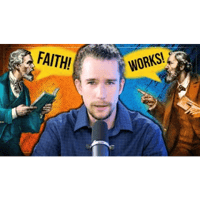
Am I teaching faith without works? In the discussion of what the Gospel is, it is important to be clear of the two pitfalls: "saved without transformation" and "saved by works" and know what the true gospel is.
We'll also be looking at whether Jesus should be worshiped, whether our memory will be erased in heaven, what "it's not religion, but a relationship" really means, the purpose of prayer if God's will is established anyway, and more!
Support Rise on Fire Ministries by contributing to their tip jar: https://tips.pinecast.com/jar/rise-on-fire