
How Early Church Compromise affected Modern Christianity
Transcript
Michelle, why do most Christian churches say we don't have to keep the law, feasts or Sabbath anymore? Because it's old covenant, and now we have the new covenant, but they still somehow want to claim that tithing is mandatory from the old covenant. How do they excuse this blatant abuse of scripture to pick and choose what they think is acceptable? Michelle, thank you for sending this in. I appreciate it. So I first, I want to say I can totally see how it can seem like some believers are picking and choosing certain commandments over others. And, you know, maybe in this case, when it comes to tithing, it can seem like, well, you know, that one is still preached because there are motives that are not pure involved. You know, I think it can be easy for us to. To wonder about that. I want you to understand that I think this is more complicated than we can just see on the surface sometimes. Look, I can't speak for every believer, every church, every Christian, but I think that we can see a historical pattern and historical reasons for why we are in the situation we are today. So if you think about most people today who are believers, they are believers because of a lot of tradition. Their family were believers, their ancestors were believers, and other believers. And that's a good thing, that there is a generational teaching of this is what God wants us to do, to teach our children of his faithfulness. And with that, though, with that teaching of the faith comes the teaching of traditions. And so some of those traditions are good, and some of them are not good, and some of those theologies are good, some of them are not good. And most people are just living out what they've been taught. And I think that we should have compassion on that, just as we, many of us, we've lived out what we've been taught and we discovered new things as we grew in our faith, and we will still discover things in our futures that we are wrong in that we thought we had right because we believed something we were taught. But actually, biblically, that may not be correct. That's gonna be all of us still in the future. So let's have compassion first of all, as we desire that compassion from our God. Because I'm gonna stand before him one day, and I'm sure there's gonna be something still that's not been worked out. And I want his grace, so I'm gonna extend that grace to everyone else. That's very important. I think that most faithful believers, Christians, churches who have a heart for God, truly, right. I believe that they actually do follow the law of God in general. You know, most of them are believing that they shouldn't murder, that they shouldn't steal or lie. They should honor their father and mother and love their neighbors, their self. These are laws. Okay, this is from the Torah. They follow these laws. They follow most of the Ten Commandments. Absolutely. Depending on who the believer itself you're talking about. And usually we take issue with them on something we see, they don't see yet. And so when we're talking about tithing specifically, tithing is not an outlier of commandments that they keep. They keep many of the Ten Commandments, but I see where the question comes from. It can seem like tithings from his old covenant, but I think that the law of God is new covenant. That's what he says. The new Covenant is Jeremiah 31, 31. The new covenant is that God will come and do something with his law. It's all about the law. He will write his law on our heart. He will change our nature. The Holy Spirit will empower us. That's what the new covenant is. Okay, so old Covenant, New covenant. The law of God is the law of God. It's just written in a different place. It's now written in our nature when we become new creatures, born new, born again by the Holy Spirit. Okay, so what's this history I've been talking about? I'm going to try and go quick guys, because there's a bit to go through here, so bear with me and I'm going to give you a video to watch if you, you need more on this. But we need to understand that historically there's been a lot of persecution of Jewish people specifically and their customs have always been used as markers to identify them. A Jewish person has been identified by pagans because of their Jewish customs, by the things they do that make them seem Jewish. Right. And so when we look at the early church, early form of followers of Christ, they were seen as a sect within Judaism because they were followers of this Jewish Messiah who followed and proclaimed the Torah, the book of the Jewish people, the God of the Jewish people, the law of the Jewish people. This is how it was seen in the first century by everyone, including the Romans. And so when the. I'm going to read to you. When we're looking at Now Roman Society, 123 AD around there and we're with the Bar Kokhba revolt, we're seeing. I'm going to read. Let me read this. This is going to be from the Encyclopedia Judaica, Bar Kochba, the Kedar publishing house in Jerusalem. And we're seeing this following the battle of Bethar, where 580,000 Jews perished in the war and many died of hunger and disease. The Romans plowed Jerusalem with a yoke of oxen. Jews were sold into slavery and many were transported to Egypt. Judean settlements were not rebuilt. Jerusalem was turned into a pagan city called Aelia Capitolina. And the Jews were forbidden to live there. They were permitted to enter only on the 9th of to mourn their losses in the revolt. And Hadrian changed the country's name from Judea to Syria Palestina. And in the years following the revolt, Hadrian discriminated against all Judean Christian sects. But the worst persecution was directed against religious Jews. He made anti religious decrees forbidding Torah study, Sabbath observance, Jewish courts, meeting in synagogues and other ritual Jewish practices. Okay, so this is very important. The reason I'm saying this is because they targeted practices that seemed ritual Jewish, which are commandments of God, like for example, going to this to keep the Sabbath, or to eat clean, or to keep the feast days, to read the Torah or to go to the Sabbath, a fellowship on the Sabbath. Right. So these are like axes on the back of Jewish people in Roman society during 123 AD and throughout history, by the way, by pagans. And so they received a greater persecution. And ultimately Christians were bar Jerusalem along with these Jewish people because they were keeping the same customs. But then Christians started separating themselves more from Jewish people because they wanted to enjoy more freedom than the Jewish people were afforded. And so they changed their appearances. And many of the things that made Jewish people seem Jewish, they stopped doing so that they were allowed to stay in Jerusalem. So they were allowed to to have freedom and not be so persecuted. We see this for example, with the Fiscus Judaicus. That's the Jewish temple tax that was changed to the Roman tax that Emperor Vespian did in the early 70s. So then, you know, instead of the two drachma half shackle being given to the Jewish temple in Jerusalem, rather after that temple was destroyed, we see that they are now saying, hey, you need to still pay that tax. You know, the Romans are saying, you just need to still pay that tax to Jupiter Capitolinus in Rome. In other words, you need to do it to a different pagan temple now. And this tax was imposed upon orthodox Jewish people, also Jewish Christians and then Gentile Christians. In other words, people who lived a life that seemed to be following this Jewish Messiah. That means they were doing things that seemed Jewish and Then later the same thing happened. I'm going to read this just quickly from Burgle, Jonathan. I'm going to put these sources in the description of the video. He wrote in the Jewish Christians and the Jewish text that the Fiscus Judaicus was originally imposed upon Jews. At the time, neither Romans nor early Christians considered Christianity to be a separate religion from Judaism, which historians refer to as Jewish Christianity. However, whether that was the intention or not, it did not take long for Christians to petition the emperor to distinguish the Christians from the purpose of the payment of the Fiscal Judaicus. And the tax only applied to practicing Jews. If they could be recognized as a separate religion, they would escape the impost. So that's what they did. Some of these Christians started abandoning the Sabbath day, the biblical feast days, diet, wearing tzitzit, meeting in synagogues, all these things that were very outwardly apparent, outwardly seeming to be Jewish customs, so that they can say, oh no, we're actually a separate religion from the Jewish people, so don't give us this tax. We don't want to have to pay this tax to as well. Okay? So they were afforded more freedoms, less persecution and so on. And so I have way more on this. There's a lot in here that we can talk about, but please go look at my video. The Forgotten Story of the Early Tribe Church. If you watch that, I go through all of these, I give you more citations and you'll see how the history unfolded with why we sit with what we sit today, with this. These certain customs that seem Jewish even today. Right? You ask someone about the Sabbath, they say, oh, that's a Jewish thing. Oh, the feast days, that's a Jewish thing. That's a Jewish thing. It's because of this attempt to separate from what seems Jewish, because of the hostility the world has given the Jewish people even today. By the way, just look at World War II. It was all about persecuting and killing Jewish people. That was what the world was warring over. Okay? This is a modern phenomena. Just it was a phenomena in AD 72. Hope that answers that complicated history. There's even more to what than I just said. And for that reason, we have to have grace on people who do not understand any of what I just said. And so they just live out what they've been taught. And it's not necessarily about what the Bible says. It's more about how people have been pressed to make certain decisions that have separated them from biblical commandments. It.
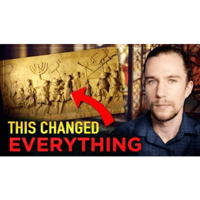
Why do many Christian churches say we no longer have to keep certain laws—like the Sabbath and the Feasts—but still enforce the law of the Tithe? Is this picking and choosing Scripture, or is there more to the story?
In this video, we address this fantastic question from a viewer and explore why modern church practices are much more complex than simply "picking and choosing."
In this segment, we uncover:
- The Law: Why tithing actually isn't an outlier
- Early Church History: How the devastating Bar Kokhba revolt (123-138 AD) affected early Christian lifestyle.
- The Fiscus Judaicus: How early Christians distanced themselves from certain Biblical laws to escape brutal Roman persecution.
Support Rise on Fire Ministries by contributing to their tip jar: https://tips.pinecast.com/jar/rise-on-fire
This podcast is powered by Pinecast.